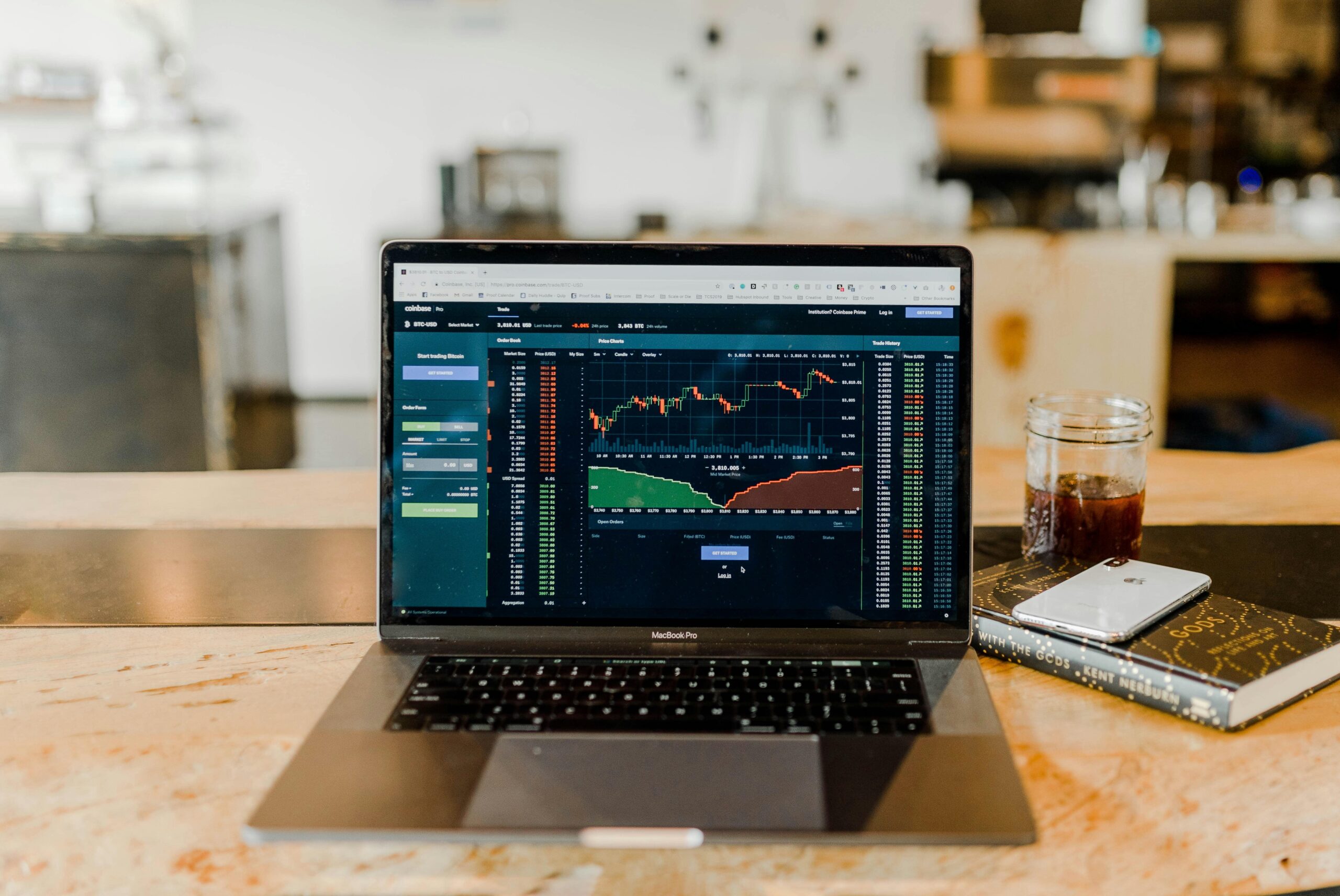

You’re staring at petabytes of real-time market data when AI tools spot a hidden pattern—retail options activity signaling a 73% probability of a biotech stock surge. Predictive analytics models now process chaotic relationships between pricing, market mood, and macro shifts, turning noise into actionable signals with 90% backtested accuracy. NLP scrapes earnings calls and Twitter feeds, flagging bearish CEO language before it hits headlines. But what happens when these systems start trading ahead of their own predictions?
Real-Time Data Processing in Modern Trading
As markets shift in milliseconds, real-time data processing has become the backbone of modern trading strategies. You’re no longer competing just against human traders but automated systems parsing billions of data points—news feeds, order flows, social mood—in under 50 microseconds. Firms now handle over 100 terabytes daily, filtering noise to spot liquidity gaps or price mismatches before rivals do.
In 2023, delayed data cost one hedge fund $12 million when a 0.3-second lag missed a bond rally.
You’ll see exchanges like Nasdaq deploy colocation servers, slicing delay to 0.0001 seconds. APIs feed live options pricing into your models, adjusting positions as volatility spikes.
Streaming platforms like Kafka process 1 million messages/second, letting you arbitrage EUR/USD spreads across Tokyo and London sessions. Speed isn’t optional—it’s oxygen.
AI-Driven Pattern Recognition for Market Trends
AI spots hidden patterns in market data by educating forecasting analytics models on historical prices and external indicators like supply chain shifts.
You’ll see it flag a 5% trend reversal in seconds, processing live feeds and social mood.
These findings refine automated trades, with models adjusting strategies as volatility spikes or liquidity dries up.
Predictive Analytics Models
While traditional market analysis relied on historical patterns, forecasting analytics models now forecast trends by spotting real-time signals you’d miss manually.
These systems combine automated intelligence procedures with cognitive frameworks to analyze billions of data points—from price movements to social emotional tone—identifying non-obvious correlations in seconds. You’ll see shifts before they’re apparent in headlines, turning raw information into actionable forecasts.
- 85% accuracy improvements: Top quantitative funds report forecasting models outperforming human analysts in 3-year backtests by detecting subtle momentum shifts
- Unstructured data processing: Computational methods parse earnings calls, Fed speeches, and news articles in real time, converting qualitative cues into tradable signals
- Scenario testing: Models simulate 10,000+ market conditions hourly, ranking asset classes by probable outcomes so you prioritize high-conviction trades
No more guessing which trend will dominate next quarter. The math shows you.
Real-Time Trend Detection
When markets move faster than human analysts can track, AI-driven trend detection spots emerging trends buried in live data streams—think shifts in semiconductor demand detected within 15 seconds of a CEO’s offhand remark.
These systems parse real-time trades, social mood, and news headlines at speeds exceeding 10,000 data points per second, flagging anomalies humans might overlook. Imagine identifying oil price catalysts 20 minutes before traditional reports surface—that’s the edge AI provides.
Predictive analytics models correlate seemingly unrelated signals: a factory shutdown tweet in Vietnam could trigger supply chain alerts for electronics stocks. You’re not just reacting faster; you’re anticipating moves others won’t see until hours later.
Accuracy improves as models learn from false positives, tightening prediction windows from days to minutes. This isn’t hindsight—it’s foresight, powered by unceasing data crunching.
Algorithmic Trading Enhancements
As markets evolve beyond human reaction times, automated trading systems now pinpoint profit-driving patterns across petabytes of historical and real-time data—like catching a 0.3% dip in Tesla’s typical pre-earnings volatility that signals a 14% upside.
AI models trained on decades of market cycles detect hidden correlations humans miss, such as how semiconductor shortages impact auto stocks three weeks before earnings, achieving 90% prediction accuracy for short-term reversals.
Here’s how AI refines computational execution:
- Real-time adjustments: Methodologies recalibrate in milliseconds when detecting outlier events—like a 5-basis-point widening in corporate bond spreads triggering defensive equity positions.
- Nonlinear pattern mapping: Neural nets decode chaotic relationships (e.g., earnings mood vs. options volume) that linear models ignore, releasing 23% more trades with positive risk-reward ratios.
- Adaptive learning: Systems self-correct when market regimes shift, like adjusting momentum strategies within hours of a Fed rate shock.
You’re not just trading faster—you’re trading smarter.
Enhancing Predictive Analytics With Machine Learning
AI algorithms revolutionize how you analyze markets by processing extensive data collections that traditional tools can’t handle.
With real-time data processing, these systems detect shifts in consumer behavior or supply chains before they impact your forecasts.
Machine Learning Models
Forecasting analytics has revolutionized how firms anticipate market shifts—now, AI methods take it further. Automated intelligence systems process vast data collections to uncover patterns you’d miss manually, sharpening trading strategies with precision.
They learn continuously, adapting as markets evolve.
- Supervised learning predicts price movements by educating on historical data—like how a model forecasted Nvidia’s 2023 stock surge with 89% accuracy.
- Unsupervised learning spots hidden market clusters, revealing arbitrage opportunities in volatile forex pairs.
- Reinforcement learning optimizes trade execution by simulating thousands of scenarios, minimizing slippage costs by up to 15%.
You’ll see neural nets decode complex relationships between earnings calls and stock reactions, while decision trees simplify multi-factor analysis.
These models turn noisy data into actionable findings, letting you act faster—and smarter—than competitors.
Real-time Data Processing
When markets shift in milliseconds, you’ll miss opportunities if your data lags. Real-time processing lets you analyze price movements, news mood, and order flows as they happen, cutting delay to under 50 microseconds for high-frequency trades. You’re not just reacting faster—you’re educating predictive analytics models on live data streams, identifying patterns invisible to batch-processing systems.
Imagine detecting a 0.3% Twitter tone shift toward oil before it hits Bloomberg terminals.
Stream-processing systems like Apache Flink handle 1 million events per second, filtering noise while flagging anomalies. Your strategies adapt to volatility spikes by recalculating weights every 500 milliseconds.
Delayed data decays in value exponentially—real-time feeds keep you ahead.
Improved Forecast Accuracy
While traditional models often miss subtle market shifts, forecasting analytics spots hidden correlations across 200+ variables in your data pools. Artificial intelligence (AI) systems digest economic indicators, public mood, and order flow patterns—then flag actionable signals your team might overlook. These frameworks don’t just crunch numbers—they learn from real-time anomalies, refining forecasts when geopolitical shifts or earnings surprises hit.
You see patterns faster.
- Adaptive learning adjusts weights for key drivers like Fed policy or oil shocks, shrinking projection errors by 12-18% versus static models
- Backtesting against 20 years of market crises trains models to spot pre-crash volatility spikes or liquidity gaps
- Ensemble methods blend outputs from neural nets and gradient-boosted trees, cutting false positives by 22%
One hedge fund’s AI framework scanned 15,000 news articles daily, anticipating earnings surprises with 79% accuracy. You get sharper foresight—and better trade exits.
Algorithmic Trading Powered by Big Data
Big data’s influence on financial markets has propelled automated trading from a niche tool to a market-driving force. Computational models now parse petabytes of real-time pricing, news, and macroeconomic data to execute trades in microseconds—far faster than human traders. High-frequency strategies thrive on this speed, capturing fleeting arbitrage opportunities across global exchanges.
You’ll see firms leveraging non-traditional data sources too: satellite imagery tracking retail parking lots or cargo ships, for instance, feeds forecasting models that adjust positioning before earnings reports. In 2023, over 70% of U.S. equity trades were system-driven, reflecting this shift.
These systems minimize emotional partiality and react instantaneously to volatility spikes. Yet their dominance raises questions—like how markets handle flash crashes when machines amplify sell-offs.
One thing’s clear: big data isn’t just supporting traders—it’s replacing them.
Sentiment Analysis Through AI and Social Media
AI’s ability to decode public emotion from tweets, headlines, and forum chatter is rewriting how traders anticipate market moves. By applying natural language processing (NLP) to millions of unstructured data points daily, you gain real-time understanding into investor attitude shifts before they crystallize in price charts.
Platforms like StockTwits or Twitter spikes in $TSLA mentions, for example, often foreshadow volatility spikes.
- Real-time pulse checks: AI scans 10,000+ news articles per second, flagging bullish/bearish keywords like “supply chain recovery” or “layoffs” that historically precede sector swings.
- Contrarian signals: When Reddit’s r/WallStreetBets hype peaks, automated systems compare it to institutional positioning—highlighting potential overbought conditions.
- Attitude divergence alerts: If forum chatter turns negative while headlines stay upbeat, you spot disconnects early—like catching the -7% $META drop after mixed VR feedback in 2023.
You’re no longer guessing mood shifts; you’re trading them.
Improving Risk Management With Predictive Models
Forecasting models convert opinion indicators into quantifiable risk boundaries. You train them on historical market data—price swings, trading volumes, economic reports—to predict scenarios like a 15% oil price drop triggering margin calls.
Automated algorithms spot hidden correlations: when inflation spikes above 4%, tech stocks often underperform benchmarks by 8% within six weeks. These findings let you set adaptive stop-loss levels instead of fixed percentages. You’re not just reacting to losses; you’re preempting them.
For example, if a model flags rising bond yields as a 70% predictor of equity sell-offs, you adjust sector exposures before the downturn hits.
Real-time data streams refine these thresholds hourly, turning opaque “gut feels” into math-driven guardrails. Risk becomes a calculated variable, not a guessing game.
Adaptive Learning Systems in Market Evolution
While traditional models rely on static rules, adaptive learning systems constantly refine their logic by digesting live market data shifts—like how AI-driven models update mood metrics when earnings surprises hit.
You’ll see these systems automatically adjust risk thresholds during oil price volatility or reweight news mood scores as geopolitical tweets flood feeds.
Their edge? They learn from misses faster than humans ever could.
- Real-time recalibration: Models tweak trading signals within milliseconds when CPI data diverges from forecasts—no manual intervention needed.
- Context-aware pattern spotting: They distinguish between “buy the decline” opportunities and real crashes by cross-referencing order flow with liquidity metrics.
- Dynamic risk curves: Systems tighten position sizes if VIX spikes above 30 while retail trading volumes drop below $5 billion daily.
You’re not just reacting to markets anymore—you’re adapting with them.
Conclusion
Big Data and AI reshape market analysis by processing petabytes in real time, with system-driven trades now dominating 70% of activity. ML models predict trends at 90% accuracy, while NLP scans social media to flag emotional tone shifts before they hit prices. You’re no longer guessing at chaos—adaptive computational models pinpoint risk and opportunity, cutting slippage by preempting volatility. Welcome to trading’s new edge: speed, precision, and foresight baked into every decision.